

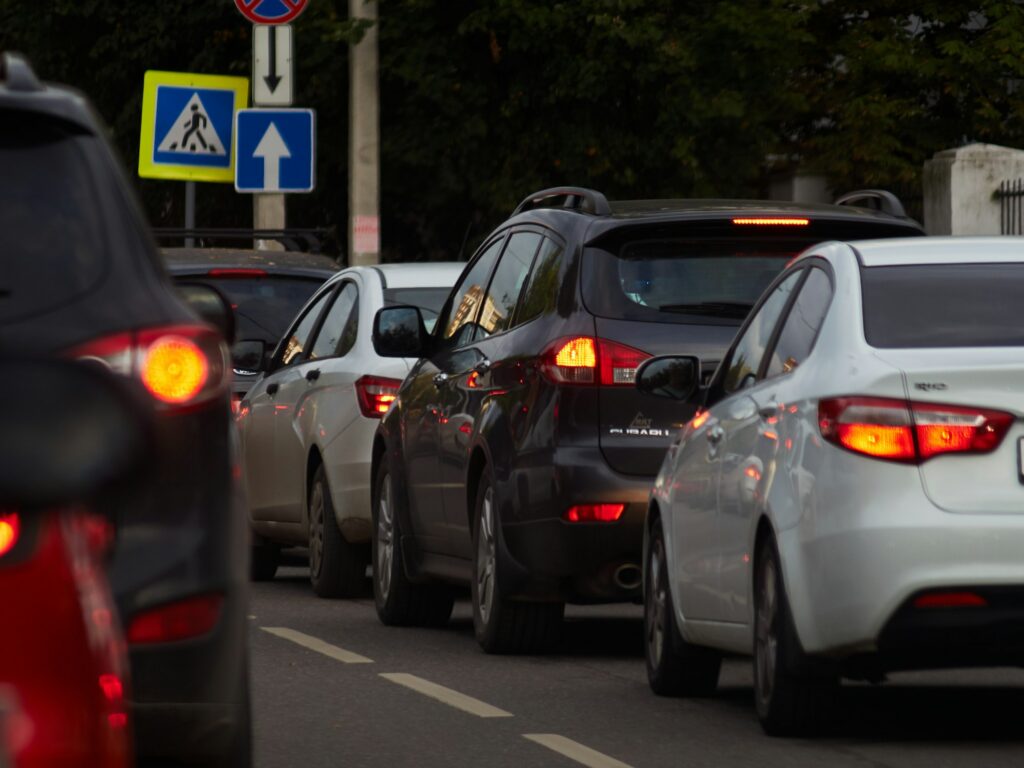
A Los Angeles County jury in Chatsworth has awarded $21.9 million over a 2019 crash in which a car struck the back of a trash truck operated by Consolidated Disposal Service LLC, a Republic Services subsidiary, the Daily Journal reported. One young passenger in the car was killed and another survived with a serious brain injury, according to the Santa Clarita Valley Signal and a release from the plaintiffs’ lawyers. The award was about $15 million to the parents of the passenger who died and about $6.9 million to the passenger who survived.
The jury did not blame the truck side alone. It assigned 65% of the fault to the driver of the car, 20% to the trash company and 15% to the truck driver, the Signal reported. The plaintiffs argued that the truck’s rear underride guard, the bar meant to stop a car from sliding under the back of a truck, did not work as it should. Republic Services disputes that its driver or company was at fault, according to the Signal.
That fault split shows how California law divides blame, and what it means for a passenger who did nothing wrong.
How does a California jury split fault in a crash?
When more than one person’s carelessness helped cause an injury, the jury assigns each one a percentage of responsibility, and the percentages must total 100 percent. The jury separately decides the total damages, and the judge works out who pays what (CACI Nos. 406 and 3933).
“Person” includes a business, so one verdict can put fault on a driver, a company and its employee, as this one did.
Can a passenger who did nothing wrong still recover?
Yes. In Li v. Yellow Cab Co. (1975) 13 Cal.3d 804, the California Supreme Court replaced the old all-or-nothing rule with comparative negligence. Your own share of fault, if you have one, reduces your damages. It does not wipe them out.
A passenger who was simply riding along usually has no fault to subtract. The California Supreme Court later held that each careless party whose conduct helped cause one indivisible injury stays liable for the full damages, reduced only by the injured person’s own share (American Motorcycle Assn. v. Superior Court (1978) 20 Cal.3d 578).
What does Proposition 51 change when several drivers or companies share the blame?
Proposition 51 (Civil Code section 1431.2) splits damages into two kinds:
- Economic damages are losses you can add up, such as medical bills and lost earnings. Every party found at fault can be made to pay all of them, whatever its percentage. The parties then sort out their shares among themselves.
- Noneconomic damages cover pain, suffering and the loss of a loved one’s company. Each party pays only its own percentage of these.
The California Supreme Court put it this way in DaFonte v. Up-Right, Inc. (1992) 2 Cal.4th 593: Proposition 51 “retains the joint liability of all tortfeasors, regardless of their respective shares of fault, with respect to all objectively provable expenses and monetary losses,” while the “more intangible and subjective categories of damages” follow “a rule of strict proportionate liability.”
The practical effect: if one party at fault has little insurance or money, the injured person may be unable to collect that party’s share of the noneconomic damages from anyone else.
Is a trucking or trash company responsible for its driver?
Usually, when the driver is on the job. An employer is responsible for harm caused by its employees’ wrongful conduct while they act within the scope of their employment (CACI No. 3700; Civ. Code, § 2338). The driver remains responsible too.
A company can also be at fault for its own conduct, such as how it maintains its trucks or trains its drivers, which a jury can weigh separately from its driver’s fault. When an employer is liable only because of its employee’s conduct, its share of liability matches the share the jury assigns to that employee (CRST, Inc. v. Superior Court (2017) 11 Cal.App.5th 1255, as quoted in CACI No. 405).
What do federal rules say about rear guards on trucks?
Federal safety rules require rear impact guards on many trucks (49 C.F.R. § 393.86). For trucks other than trailers, a guard is required when the bottom of the rear of the truck sits more than 30 inches off the ground when empty. The guard must keep that gap at 30 inches or less. Some vehicles, including special purpose vehicles, can meet the rule with parts of their body or chassis that give comparable protection.
Whether a guard met those rules, or worked, is a fact question in each case. Here it was the plaintiffs’ argument, and the company disputes fault.
How long do I have to file a claim?
Generally two years from the injury for a personal injury claim in California, according to the California courts’ self-help site. If a city, county or other public agency, or one of its employees, may be involved, you must first file a claim with the agency by a much earlier deadline.
What should I do after a crash with a truck?
- Get medical care right away, and keep every record and bill.
- Make sure police or CHP take a report, and get the report number.
- Photograph the scene, including the back of the truck, any rear guard, the company name and truck number, and the damage to every vehicle.
- Be careful with insurance calls. You don’t have to give the truck company’s insurer a recorded statement before you understand your rights.
- Keep track of time. The two-year deadline, and the shorter one for public agencies, can pass quickly while you recover.
A verdict in one case doesn’t predict the result in another. Every crash turns on its own facts, its own evidence and the insurance available. For more on injury claims, see our Articles & Guides.
Sources
- Daily Journal: Jury awards $21.9M over fatal garbage truck crash (Nov. 9, 2026)
- Santa Clarita Valley Signal: Jury awards $21.9M to families from fatal 2019 crash (Nov. 14, 2026)
- Plaintiffs’ counsel release (PR Newswire): $21.9 Million Verdict in Crash Involving Three Teens Raises Truck Safety Concerns
- Judicial Council of California Civil Jury Instructions (CACI), 2026 edition: Nos. 405, 406, 3700, 3933
- Li v. Yellow Cab Co. (1975) 13 Cal.3d 804 (Justia)
- American Motorcycle Assn. v. Superior Court (1978) 20 Cal.3d 578 (Justia)
- DaFonte v. Up-Right, Inc. (1992) 2 Cal.4th 593 (Justia)
- California Civil Code § 1431.2 (California Legislature)
- California Civil Code § 2338 (California Legislature)
- 49 C.F.R. § 393.86, Rear impact guards and rear end protection (Cornell LII)
- California Courts Self-Help: Deadlines to sue someone
