

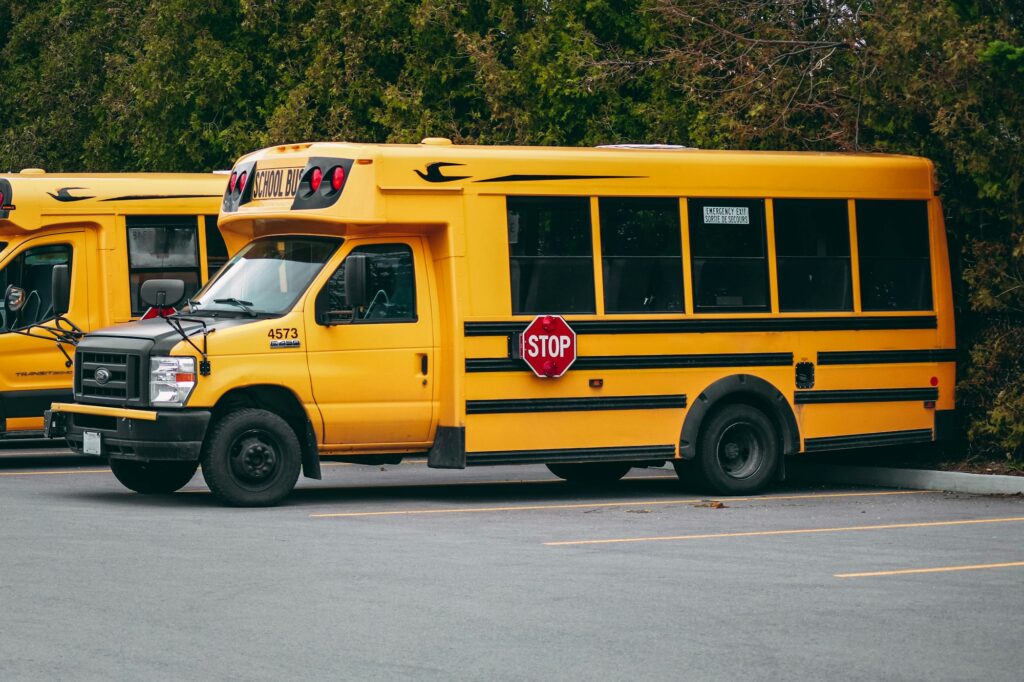
On the afternoon of Friday, Nov. 6, a sedan and a Mountain Empire Unified School District bus collided near State Route 94 and Plaskon Lane in Potrero, in eastern San Diego County. The sedan’s driver was found dead at the scene, FOX 5 San Diego reported. The bus was carrying 35 students from Potrero Elementary School, and the bus driver and several students had minor injuries.
Reports differ on how many students were hurt. FOX 5 reported two; NBC 7 San Diego and Patch, citing the California Highway Patrol, reported three. NBC 7 and Patch also reported that, according to the CHP, the car crossed the double yellow lines into the path of the bus, and that drugs and alcohol did not appear to be factors. The CHP is still investigating the cause, and the school district said it is cooperating fully.
A crash like this leaves families with practical questions about medical bills, insurance, and deadlines. This article explains the general rules in California. It is general information, not advice about this crash or anyone involved in it.
Who decides who was at fault?
Investigators, insurers, and, if a case is filed, the courts. A news report is an early account, and the CHP has not announced a cause. Fault matters because an injured passenger’s claim generally runs against whoever was legally responsible for the crash, and it is often paid through that person’s insurance.
When the other driver has died, families often assume there is no one left to make a claim against. California has specific procedures for claims involving a person who has died and that person’s insurance. They come with their own steps and timing, which is one reason to get answers early rather than waiting to see how things settle.
How long do you have to file an injury claim in California?
For most personal injury cases, the deadline to file a lawsuit is two years from the date of the injury (Code Civ. Proc. § 335.1). The California courts’ self-help site lists that two-year rule and warns that some cases have different deadlines and extra requirements.
Two years can sound like plenty of time. It goes faster than most people expect while they are dealing with recovery, school, and work, and evidence such as witness memories and vehicle data gets harder to collect as time passes.
What if the injured passenger is a child?
The clock can work differently for a child. The courts’ self-help site explains that the deadline may be paused (“tolled”) while the person bringing the case is a minor, and that it starts running again when the reason for the pause ends, such as when the child turns 18.
That pause does not apply to every deadline. The short government-claim deadline described below is a separate rule, so a family should not assume a child’s claim can wait until adulthood.
What changes if a government agency may be involved?
Before you can sue a government agency in California for an injury, you generally have to file a written claim with that agency first. For an injury to a person, the claim is typically due within six months of the injury (Gov. Code §§ 905, 911.2).
According to the courts’ self-help site, the agency has 45 days to respond. If it denies the claim, you have six months from the date the rejection was mailed to file a lawsuit. If it doesn’t respond by the deadline, you generally have up to two years from the injury to start a case.
Nothing in the reporting suggests the bus driver or the school district did anything wrong in this crash. The rule is worth knowing for any crash where a public agency could share responsibility, such as a public vehicle, a road design problem, or a missing sign, because six months is much shorter than the usual two years.
Does a child’s injury settlement need a judge’s approval?
Generally, yes. The California courts tell parents and guardians who are acting for a minor to ask the court to approve any settlement of the child’s case or claim, and to approve how the money will be used. That request is made with Judicial Council form MC-350.
The approval step exists to protect the child. Families should expect it in the timeline for any settlement and should not treat a signed insurer release as the end of the process for a child’s claim.
What should passengers and families do after a bus crash?
- Get checked, and follow up. A visit soon after a crash creates a record and catches problems early. Keep going to follow-up appointments your doctor recommends.
- Keep every record. Save medical bills, visit summaries, receipts, missed-work notes, and messages from the school or insurers in one place.
- Write down what you know. Note the date, time, and place, the names of anyone you spoke with, and any claim or report numbers you are given.
- Be careful with insurer calls. You can take time before giving a recorded statement or signing a release, and you can ask for anything important in writing.
- Track the deadlines. Mark six months and two years from the date of the crash on your calendar, and get legal advice well before either one.
Sources
- FOX 5 San Diego / KSWB (via Yahoo News), “Driver killed, 2 students injured in Potrero school bus crash,” Nov. 8, 2026
- NBC 7 San Diego, “Woman dies, 3 children on school bus injured after head-on crash in Potrero,” Nov. 10, 2026
- Patch, “Woman Killed, 3 Students, Bus Driver Injured In Head-On Crash In San Diego County,” Nov. 2026
- California Courts Self-Help Guide, “Deadlines to sue someone”
- California Courts Self-Help Guide, “Ask a government agency to pay you (submit a claim)”
- California Courts, Form MC-350, Petition for Approval of Compromise of Claim or Action for Minor or Person With a Disability
- Code of Civil Procedure § 335.1
- Government Code § 905
- Government Code § 911.2
